


What is Solar PV & How Does It Work?
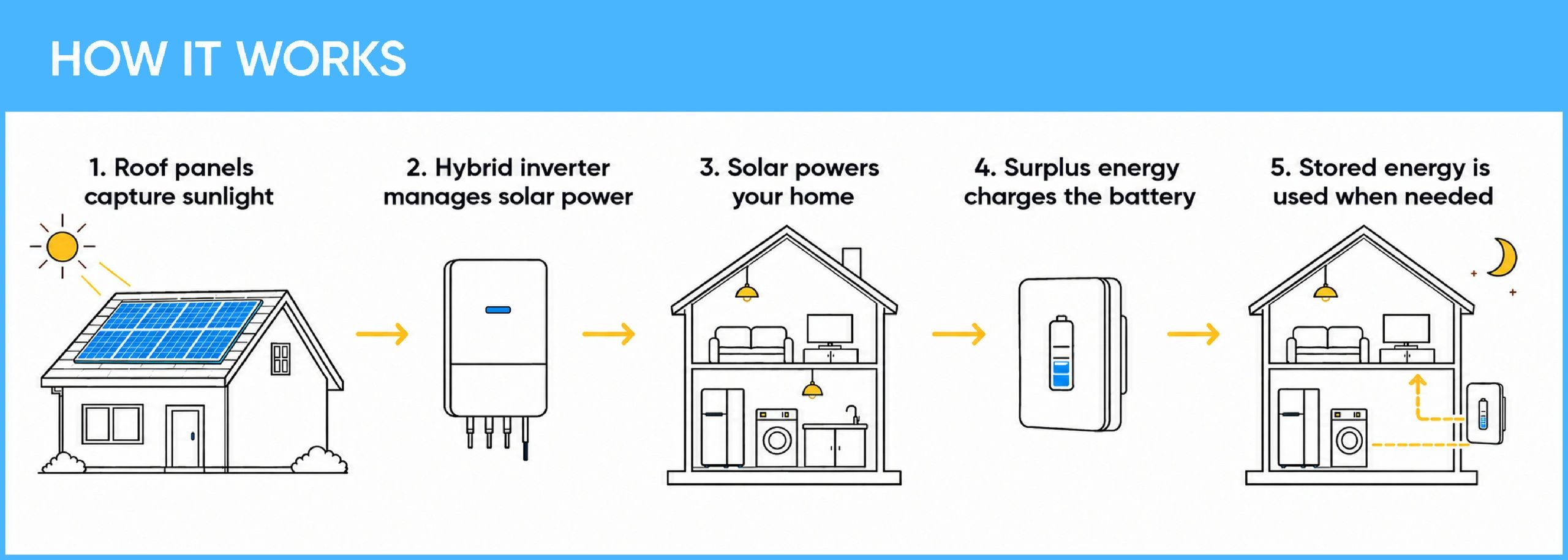
Solar PV (photovoltaic) panels generate renewable electricity from daylight. The panels produce DC (direct current) electricity, which an inverter converts into AC (alternating current) electricity for use throughout your home or business.
The electricity can be used within the property as it is generated, reducing the amount purchased from the grid. Any surplus electricity may be stored in a compatible battery or exported to the grid, depending on how the system is designed and configured.
Every property is different, so we design each Solar PV system around the available roof or ground space, orientation, shading, electricity consumption and what you want the system to achieve.
Why Choose Solar?
Reduce Energy Costs
Reduce Grid Reliance
Reduce Grid Reliance
Use renewable electricity generated at your property.
Reduce Grid Reliance
Reduce Grid Reliance
Reduce Grid Reliance
Purchase less electricity from your energy supplier.
Generate Clean Energy
Designed for the Future
Designed for the Future
Produce clean renewable electricity from daylight.
Designed for the Future
Designed for the Future
Designed for the Future
Combine Solar PV with battery storage or EV charging.

Solar Designed Around Your Property
Solar PV is not limited to conventional tiled roofs. Systems can be designed for concrete, clay, slate & rosemary tiles, metal roofs and flat roofs using mounting equipment suited to the roof construction.
Panels may be installed above the existing roof covering or incorporated into the roof on suitable projects using an in-roof mounting system.
Where a roof is unsuitable—or sufficient outdoor space is available—ground-mounted Solar PV can provide greater flexibility over the position, orientation and size of the array, subject to the site and any applicable requirements.
Solutions For Any Installation
Accessories For Solar Installations

Make More of Your Solar Energy
Solar PV can operate effectively without battery storage. However, a compatible battery may allow surplus solar electricity to be stored for use later, helping you use more of the renewable energy generated at your property.
Visit our Battery ESS page to learn more about energy storage, battery capacity and system compatibility.
Supporting You From Design To Handover
- Bespoke System Design
- DNO Application
- Professional Installation & Commissioning
- System Monitoring
- MCS Certification & Handover Documents
- HIES Insurance Guarantee
- Ongoing Maintenance & Upgrade Support
Ready to Explore Solar PV?
Arrange a free survey and receive a no-obligation quote.
Frequently Asked Questions
There's no one-size-fits-all answer. The right number depends on your electricity use, available space, orientation, shading, budget and what you want the system to achieve.
Usually not. You'll still need grid electricity when your panels aren't producing enough to meet your demand, particularly at night, and your standing charge will normally remain. Solar PV can, however, significantly reduce the amount of electricity you need to purchase from the grid.
Yes. Solar panels generate electricity from daylight, not just direct sunshine, so they work throughout the UK, from the top Scotland to the bottom of England! The UK receives plenty of diffuse light — sunlight scattered through clouds and the atmosphere — which solar panels can still use to generate electricity.
Yes. Solar panels continue generating whenever there is sufficient daylight. Winter generation is normally lower because the days are shorter and there is less available solar energy from the sun, sometimes referred to as solar irradiance.
No. South-facing roofs are excellent for solar, but east- and west-facing roofs can also perform very well. Even north-facing roofs can generate electricity, although a lot less than a comparable south-facing roof, so orientation, pitch and shading should all be considered when designing the system.
Solar PV can be installed on many roof types, including concrete and clay tiles, slate, rosemary tiles, metal and flat roofs. Different mounting systems are used to suit each roof type, with purpose-designed systems available that position and secure the panels appropriately.
Potentially. If suitable land is available, a ground-mounted solar system can be an excellent alternative and can offer greater flexibility over the position, orientation and size of the array. This also allows for easier cleaning compared to a roof mounted system.
Solar panels generate DC (direct current) electricity. The inverter, the brains of the system, converts this into AC (alternating current) electricity, which is what your home and appliances use.
Yes. Your home can use solar electricity live as it is being generated, reducing the amount you need to import from the grid. Without a battery, making good use of electricity while your panels are generating can help you benefit more from your solar system.
Surplus electricity will normally be exported to the electricity grid. If you have suitable battery storage, surplus solar electricity can be stored and used later instead.
Yes, potentially. The Smart Export Guarantee (SEG) allows eligible customers to receive payments from participating electricity suppliers for renewable electricity exported to the grid.
Different suppliers offer different rates and terms. Ofgem maintains an official list of SEG suppliers: View Ofgem's Smart Export Guarantee Supplier List
Potentially. Your standing charge won't disappear, but the money earned from exporting surplus solar electricity could offset some or potentially all of its annual cost, depending on how much you export and your export tariff.
No. Solar PV works without a battery. Your home can use the electricity while it's being generated, with surplus electricity being exported to the grid. A battery simply gives you the option of storing suitable surplus energy for later.
Not normally with a standard grid-connected solar PV system. For safety, the inverter will shut down during a power cut, meaning your solar panels won't continue supplying your home even if it's sunny.
Backup power is possible, but the system must have suitable backup/EPS equipment specifically designed and installed for this purpose.
Yes. Solar PV can be paired with compatible EV charging equipment, allowing you to make greater use of the electricity generated at your property.
Modern solar panels are designed for long-term use and commonly come with lengthy manufacturer product and performance warranties. The exact warranty and expected performance depend on the panels selected.
Not necessarily. Factors such as roof condition, shading, available space, orientation, structural considerations and the existing electrical installation can affect suitability, which is why assessing the individual property is important.
Yes. Many solar PV systems can later be paired with battery storage, EV charging and other energy technologies, although compatibility depends on the equipment and how the original system was designed.
Solar PV systems are generally low maintenance, but periodic health checks and inspections can help identify faults, damage or performance issues before they become bigger problems. Visit our Operations & Maintenance page to find out how we can help look after your existing solar PV system.


Copyright © 2026 Renewable Fitting Company - All Rights Reserved.