Solar carports combine renewable electricity generation with practical, covered parking, helping you make better use of the space available around your property. They can provide an excellent alternative when a roof is unsuitable for solar panels or offer additional generating capacity alongside an existing rooftop system. The electricity produced can help power your home or business and can also be combined with battery storage and EV charging.
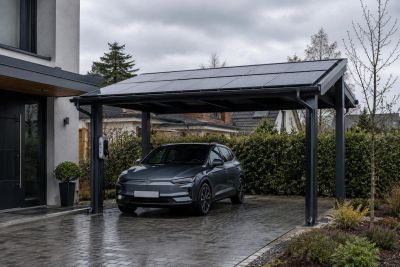
Produce clean electricity that can help power your home or business.
Provide additional protection for vehicles from rain, frost and direct sunlight.
Combine your solar carport with convenient charging for electric vehicles.
Store surplus solar electricity so it can be used later when needed.
Solar panels built into the carport canopy generate direct-current electricity from daylight. An inverter converts this into alternating-current electricity, which is then distributed according to demand across the site. Electricity can be used by the business and its EV chargers, while any surplus can be stored in a battery or exported to the grid.

Every car park, business and energy requirement is different. We assess how the space is currently used before designing a solar carport that supports vehicle access, renewable generation and your future energy plans.

A solar carport is a covered parking structure with solar panels installed across its roof. It provides sheltered parking while generating renewable electricity for your property.
Solar carports can be designed for homes, businesses, workplaces, retail parks, schools, healthcare facilities, public car parks and any locations with suitable parking space.
A solar carport can be an excellent alternative when a roof is unsuitable, shaded or already fully utilised. It can also add generating capacity alongside an existing rooftop system.
A well-designed carport should minimise disruption to the existing parking layout. Column positions, vehicle access, turning space and clearance are all considered during the design.
Yes. EV charging can be incorporated into the carport design, allowing the electricity generated to help charge company vehicles, employee cars, visitors’ vehicles or a commercial fleet.
Yes. Battery storage can retain surplus solar electricity for use later, helping your organisation use more of the energy generated on site.
Solar carports provide useful shelter, although the level of weather protection depends on the selected panel system, canopy design, drainage and sealing arrangements.
Generation depends on the number of panels, their orientation, shading and local site conditions. We assess these factors and provide an estimated annual generation figure during the design process.
Yes. The electricity can help supply the connected building, EV chargers or battery storage. Surplus electricity may also be exported to the grid where suitable arrangements are in place.
Planning requirements depend on the location, size and design of the proposed structure. This should be checked for each individual site before work begins.
A DNO application may be needed depending on the proposed system and its connection. We can assess the requirements and assist with the appropriate application process.
Timescales depend on the carport’s size, ground conditions, electrical work and any required permissions or grid approvals. A project programme can be provided once the site has been assessed.
Maintenance may include inspections of the panels, structure, electrical equipment, drainage and EV chargers. Monitoring can also help identify unexpected changes in system performance.
Copyright © 2026 Renewable Fitting Company - All Rights Reserved.